From Open Meeting to Small-Group Conversation
Open meetings and small-group conversations serve different community purposes; learn how format, facilitation and participation needs shape the choice.
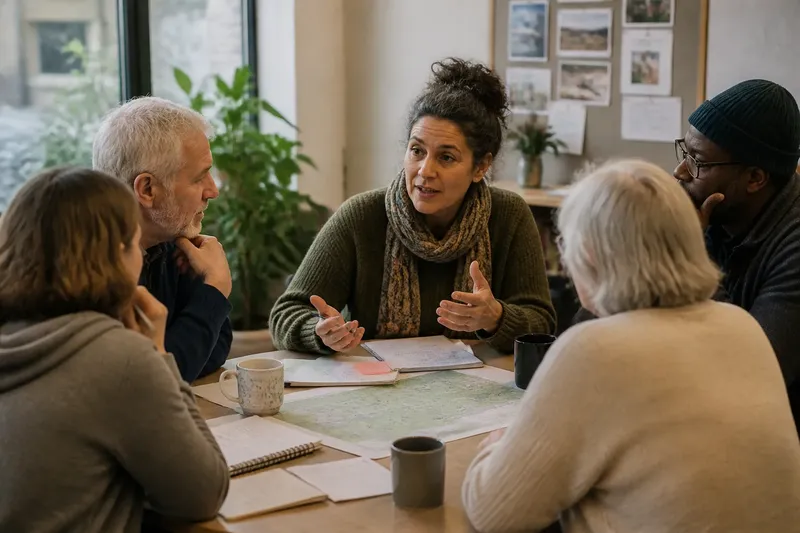
Open meetings and small-group conversations help neighbours participate in different ways. An open meeting makes it possible to hear a shared proposal in public; a smaller, facilitated conversation gives people room to explore what that proposal means in daily life. The shift between formats is not a contest over which one is better. It is a choice about what the community needs to do next.
Why did community discussion move toward smaller conversations?
Smaller conversations gained attention because a large gathering can make it difficult for quieter participants to speak. A microphone and a public agenda can support orderly comments, yet they also reward people who are comfortable making a concise statement in front of a room. In a group around a table, people can ask follow-up questions and build on one another’s observations.
This change does not mean that public meetings disappeared or became obsolete. Communities still use them to announce proposals, make decisions in an open forum, and let residents hear the same information at once. Small-group formats have developed alongside those gatherings, often to gather perspectives before a decision or to help people understand the effects of a choice.
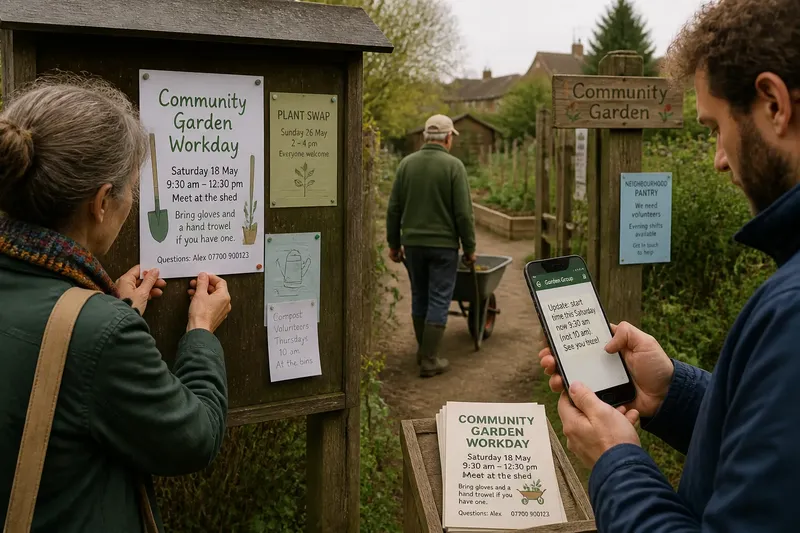
The format can also reflect the project itself. A meeting about a proposed change to a shared garden may need a public presentation of the options, while a discussion about how people use the garden may benefit from several smaller tables. The subject remains the same, but the task changes from sharing information to listening for detail.
What does an open meeting do best?
An open meeting is useful when residents need a common account of a proposal, a visible place to raise concerns, or a clear record of public discussion. A facilitator can introduce the issue, explain what is settled and what is still open, and invite comments in turn. Attendees can hear questions raised by others rather than receiving only separate summaries afterward.
That shared setting has limits. A long list of speakers can leave little time for exchange, and a tightly timed comment period may favor prepared remarks over questions that emerge during the meeting. Attendance alone also does not reveal who feels able to contribute or whose experience has not been heard.
Open meetings are therefore not automatically representative simply because the room is available to everyone. The time, location, language, format, and way comments are handled all affect participation. A public gathering can be an important part of a process without being the whole process.
What changes when neighbours meet in small groups?
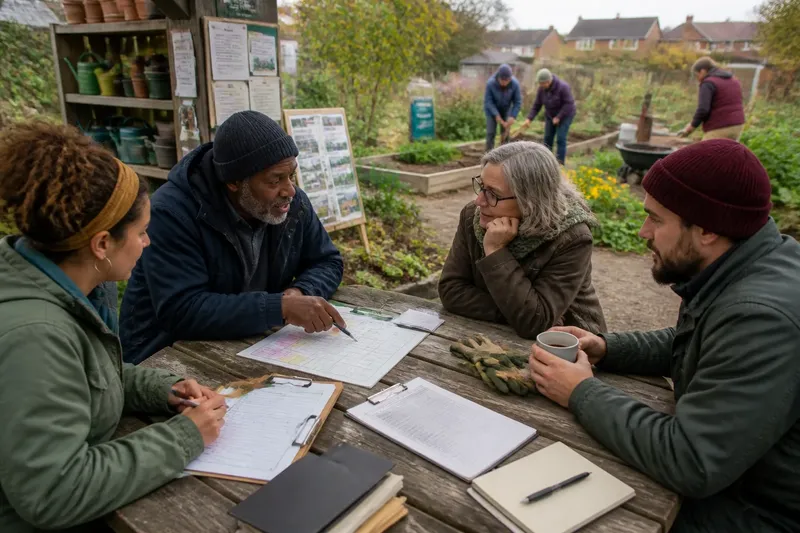
A small group can make conversation more reciprocal. Participants can clarify what they mean, compare different experiences, and notice where an apparently simple proposal has several consequences. A facilitator may invite each person to speak, keep the discussion connected to its purpose, and make room for disagreement without forcing an artificial consensus.
The smaller setting can still exclude people. A group may be difficult to join if the invitation is unclear, the location feels unfamiliar, or the conversation moves too quickly. Facilitators also have considerable influence: the questions they ask, the order in which people speak, and the notes they keep can shape what later appears to be the group’s view.
For that reason, a small-group conversation should not be treated as a private substitute for public accountability. Participants need to know how their comments will be used, who will see the notes, and whether the group is advising, deciding, or simply exploring. Clear purpose helps prevent a warm discussion from being mistaken for a binding decision.
How should a community choose between the formats?
Start with the task, not with a preference for one kind of meeting. If neighbours need to hear the same announcement or respond to a defined public proposal, an open meeting may fit. If organizers need to understand how people experience a place, identify overlooked concerns, or discuss options in depth, smaller conversations may be more useful.
Some projects need both. An open gathering can introduce a proposal and explain the decision process. Small groups can then explore specific questions, followed by a public meeting that reports what was heard and explains what happens next. This sequence works only if organizers make the connection between the conversations visible; otherwise, residents may wonder whether their contributions went anywhere.
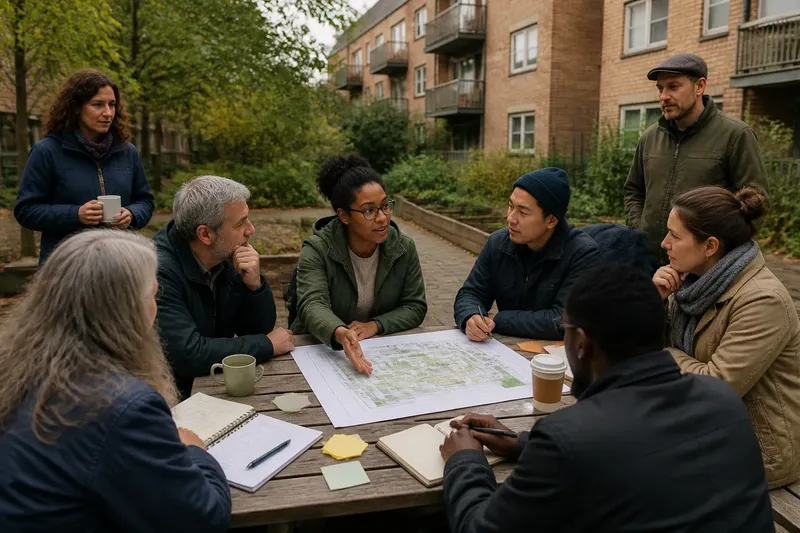
Say a neighbourhood association is considering changes to a shared courtyard. It could first hold an open meeting to present the proposed uses and invite initial concerns, then convene small conversations with residents who use the space in different ways. The expected observable result would be a public record of the proposal alongside more detailed comments about how people use the courtyard, not a claim that every resident agrees.
Think of the formats as different tools in a kitchen drawer: a large serving bowl helps everyone share the same meal, while smaller dishes let people handle separate portions. The analogy has limits, but it captures a useful point: choosing the container should follow the work, not an assumption that one size suits every purpose.
What should participants expect from facilitation?
Facilitation is not simply keeping a meeting on schedule. It includes making the purpose understandable, noticing who is speaking, and helping the group distinguish questions that can be answered now from those that need follow-up. A facilitator should also explain whether they are neutral about the outcome or representing the organizing body.
In an open meeting, useful facilitation may include a visible speaking order, plain-language explanations, and a way to submit a comment without taking the microphone. In a small group, it may mean inviting people who have not spoken, asking for examples, and checking whether a summary accurately reflects the discussion. Neither format removes the need for a clear route from comments to decisions.
Participants can reasonably ask how notes will be shared and what the group can influence. Organizers should avoid presenting a conversation as open-ended if a decision has already been made. Where the process has limits, naming them plainly is more respectful than implying that every suggestion can be adopted.
Which format fits the question you need answered?
Can a small group make a community decision?
It can if the community has clearly authorized that group to decide, but a discussion group is not automatically a decision-making body. Organizers should state its authority before the conversation begins and report the outcome to the wider community.
Are open meetings more inclusive?
They offer public access, but access alone does not ensure that every neighbour can attend or speak comfortably. Practical arrangements and more than one way to contribute can help address barriers.
How many people should join a small-group conversation?
There is no single right size; the useful number depends on the question, the time available, and whether participants can hear and respond to one another. If the group grows too large for exchange, organizers can divide it into smaller conversations and bring the themes back together.
How can organizers show that comments mattered?
They can share a concise account of the themes raised, identify which decisions remain open, and explain what will happen next. Reporting back does not require adopting every suggestion, but it should make the relationship between participation and action understandable.
What makes the transition between formats credible?
A transition works when each gathering has a distinct purpose and participants can see how the pieces connect. Organizers can say what the open meeting is meant to establish, what smaller conversations are meant to uncover, and how the information will return to the public process. This need not be elaborate; a short explanation at the start and a clear follow-up can prevent confusion.
It also helps to preserve disagreement rather than flattening it into a single “community view.” A summary can distinguish shared concerns from different preferences and note which questions remain unanswered. That gives decision-makers a more honest account than a claim of consensus that the conversation did not reach.
Open meetings and small-group conversations are most useful when treated as complementary ways to participate, not rival models. For a community choosing between them, the practical question is what people need to hear, say, or work through together. Match the format to that need, make its limits clear, and leave participants able to see what follows.